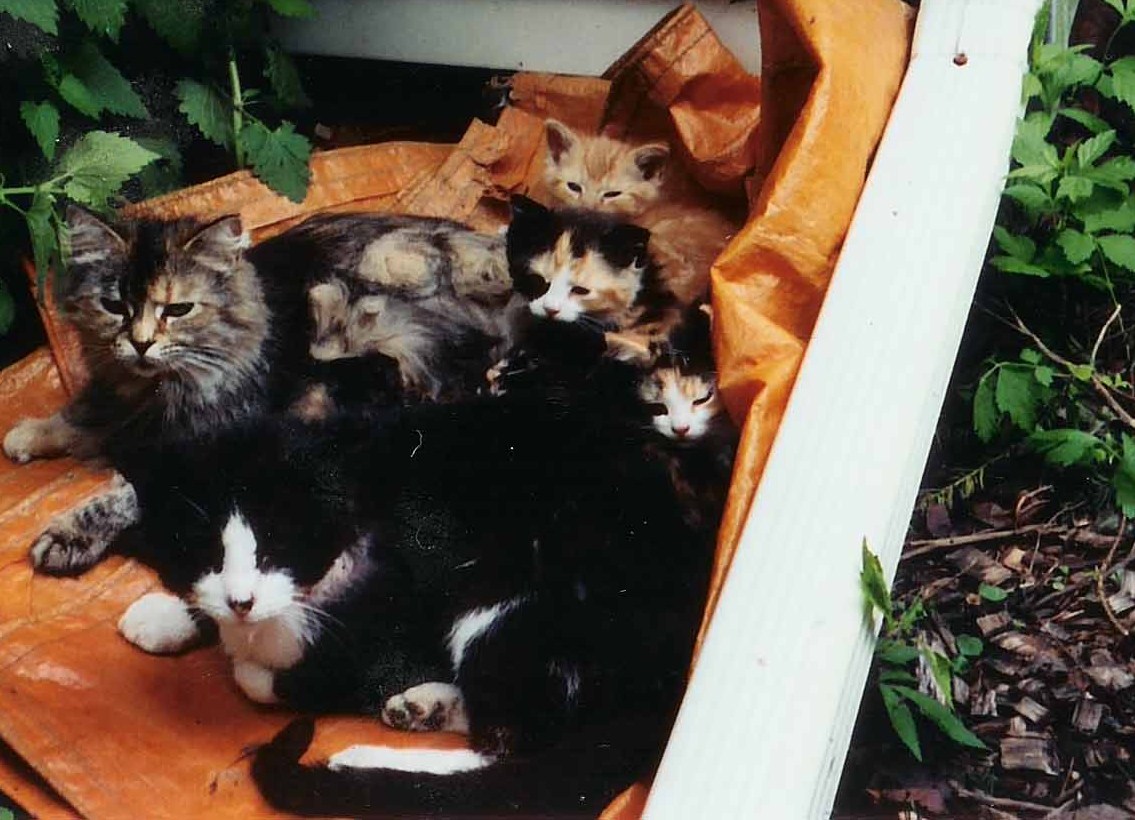
I learned about feral cats before I ever saw one. In 2000 I attended a “No Kill Conference” in
California and listened to a presentation by one of the founders of Alley Cat
Allies on how to humanely care for them.
When she got to the part about how
often people find them living in their yards I almost walked out of the room. I was at the conference to help formulate cat
programs for our foundation and I had never heard anyone in Michigan (where I
was then living) mention that they had “wild” cats living in their yard. Surely
this phenomenon was limited to the east coast and wouldn’t play a part in our
mission.
But– within a few months of starting our TLC (for The Love
of Cats) programs -- Michigan feral cat colonies were popping up
everywhere. We responded in two
ways: (1) we formulated a free
spay/neuter program for feral cats which we continued until we left Michigan in
2009 and (2) when we purchased a farm to sanctuary orphaned geriatric cats, we
installed a show-and-tell feral cat
colony in its barn. We wanted visitors
to see feral cats up close and personal – and to understand how well they could
live as outdoor-only cats. Part of the ACA TNR perspective was that
these cats were best sterilized and then left in their outdoor homes with a
dedicated caregiver providing food, water and dry shelter. For – if cats weren't socialized to people
before they turned 8 weeks old – they would always be afraid of them – acting more
like squirrels or rabbits than house cats.
Joyce was one of the feral cats in our colony. And of the
ones we ultimately moved indoors when we closed the farm, Joyce was one of the
most feral. Clearly she preferred cats
to people and ACA was right about her – even after living as an indoor-only cat
for 7 years – she never changed. Rarely
could we pet her and taking her to a vet for a routine exam would have required
live-trapping so we never did. Then
last summer she started showing signs of chronic inflammatory bowel or perhaps lymphoma
and we considered taking her in for evaluation.
At 12 years old, though, anesthesia without blood work was risky and
there was no way a vet could examine her without it. And – if we did find out what was wrong with
her, medicating her would be impossible.
Her quality of life seemed pretty good and there were no signs of physical discomfort. Then – last week we noticed she was easier to pet and that her coat was starting to look a little straggly. Little did we know that she was about to leave us –she was still acting normal in most other ways. New Year’s Eve she was in her regular sleep spot when we went to bed but sometime during the night she died without moving from it. We don’t know what triggered her death, but we think it was heart failure. Hopefully it was a peaceful ending.
Her quality of life seemed pretty good and there were no signs of physical discomfort. Then – last week we noticed she was easier to pet and that her coat was starting to look a little straggly. Little did we know that she was about to leave us –she was still acting normal in most other ways. New Year’s Eve she was in her regular sleep spot when we went to bed but sometime during the night she died without moving from it. We don’t know what triggered her death, but we think it was heart failure. Hopefully it was a peaceful ending.

The house is a bit quieter now and we miss her. But mainly our heart goes out to Larry –
another feral cat we moved indoors with her that spent most of his time
snuggling with her or walking to and from the food dish with her. We used to think that Joyce relied on him
for security – she was about a third of his size. But over the years we learned it was the
other way around – she was his security blanket. He has other friends for sure – but he’ll
never have another Joyce. RIP.